
Which Self-Custody Wallets Support On-Chain Stocks?
Comparison Last verified 2026-10-19 7 min read
You no longer need a brokerage-style app to get on-chain exposure to stocks. Several self-custody wallets now put tokenized stocks inside their swap or market screens. The harder part is choosing a wallet that supports the issuer, network, and next step you care about.
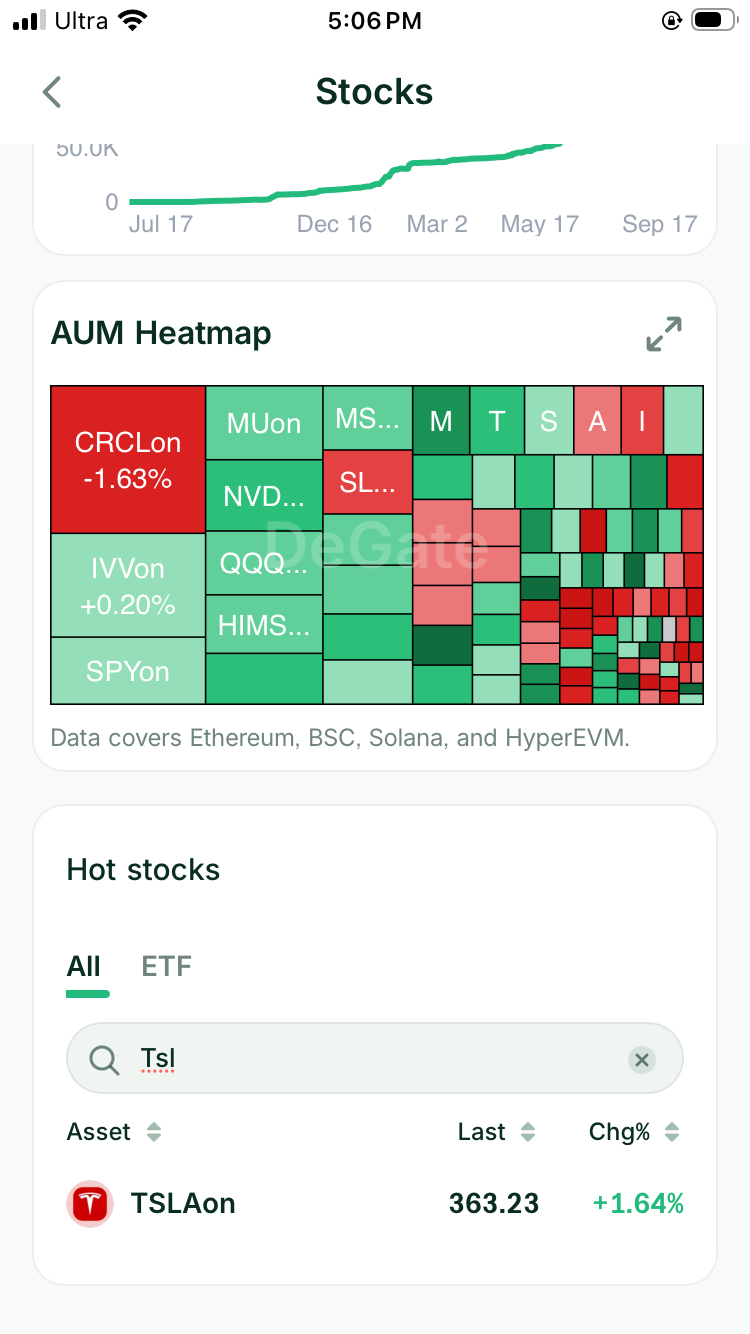
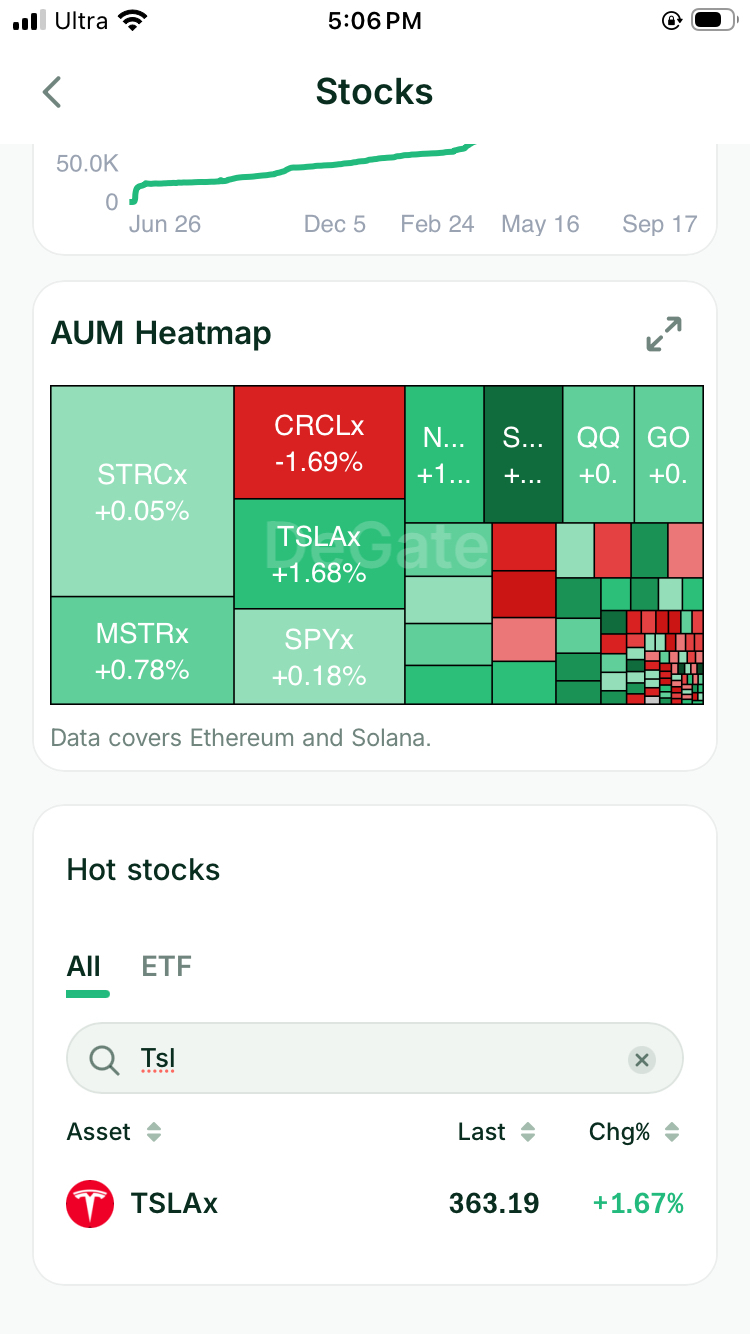
DeGate is a strong fit if you want to trade an on-chain stock or use USDC to open a stock LP directly. Its stock pages distinguish Ondo from xStocks and use Token Info to identify the issuer. When the route is available for an Ondo order, a solver partner integrated with DeGate can send a Request for Quote (RFQ) through Ondo’s official API. DeGate’s broader multichain Trade routes can reach other stock tokens, including bStocks on BNB Smart Chain, Coinbase Stock Tokens on Base, and Robinhood Stock Tokens on Robinhood Chain, when an executable quote is available.
Robinhood Wallet provides a native route for Robinhood Stock Tokens on Robinhood Chain. DeGate can also swap these tokens through its general Trade route when an executable quote is available. This route-level support is separate from DeGate’s issuer-level stock pages for Ondo and xStocks. MetaMask, Trust Wallet, and Bitget Wallet also have native RWA or Stock Token routes. A general-purpose wallet such as Rabby can hold compatible tokens. If you also need issuer identification, stock quotes, and LP management, check whether the wallet provides those functions.
Start with the stock token, not the wallet brand
Searching for one company’s stock may bring up more than one token. Different companies can issue them, on different networks, with their own dividend and redemption rules.
Write down the exact product you want before comparing wallets. For example:
- xStocks issued by Backed Assets (JE) Limited
- Ondo Global Markets tokens
- Binance-associated bStocks issued by BTech Holdings
- Coinbase Tokenized Stocks on Base, using the B20 token standard described by Coinbase
- Robinhood Stock Tokens on Robinhood Chain
The wallet needs to support that issuer’s token on the chain where you plan to buy it. Displaying an ERC-20 balance is only the first step. You also need a trusted asset page and an executable quote.
Compare wallets by the job you need to finish
The table describes product entry points, not every token a wallet can technically display. Availability changes by asset and region, so check the live app before funding a trade.
| Wallet | Native stock or RWA entry | Issuer coverage described in official materials | What stands out | Check before using |
|---|---|---|---|---|
| DeGate | Yes | Stock pages distinguish Ondo from xStocks and identify the issuer; Ondo trades can use RFQ when available; bStocks, Coinbase Stock Tokens, and Robinhood Stock Tokens can be swapped through general multichain routes | Stock discovery and trading connect to available Turbo Range stock LPs in the same self-custody wallet | Live route and quote for the exact asset; issuer-level information and LP availability are separate checks |
| Robinhood Wallet | Yes | Robinhood Stock Tokens on Robinhood Chain | Native discovery and swaps for the issuer’s own Stock Tokens in a self-custody wallet | Jurisdiction, exact contract, current trading capability and liquidity; do not confuse these tokens with Classic Stock Tokens in the Robinhood Europe app |
| MetaMask | Yes, in MetaMask Mobile | Ondo tokenized stocks, ETFs, and other RWAs | Familiar wallet with an in-app Ondo route on Ethereum | Regional restrictions, designated quote windows, Ethereum-only scope described on the current help page |
| Trust Wallet | Yes, through Swaps | Ondo assets and separate bStocks coverage | Stocks appear in the standard swap flow; official pages describe self-custody RWA access | Region, network, trading hours, and the terms of each issuer family |
| Bitget Wallet | Yes | Reality, Ondo, and xStocks in its RWA Trading API | Aggregates different liquidity types and selects a route by asset | The returned chain, route, quote expiry, price impact, and whether a quote is available |
| General-purpose wallets | Usually through token support or connected dApps | Depends on network and dApp | Useful if you already know the contract and venue | No assumption of native discovery, verification, quoting, or stock LP tools |
The table is not meant to name one wallet as the best for everyone. If you only want to buy an Ondo asset on Ethereum, the purchase route and holding experience matter most. If you want to put that stock token and USDC into an LP afterward, you also need a pool and position-management tools. Those two users may reasonably choose different wallets.
Check what the wallet tells you before you sign
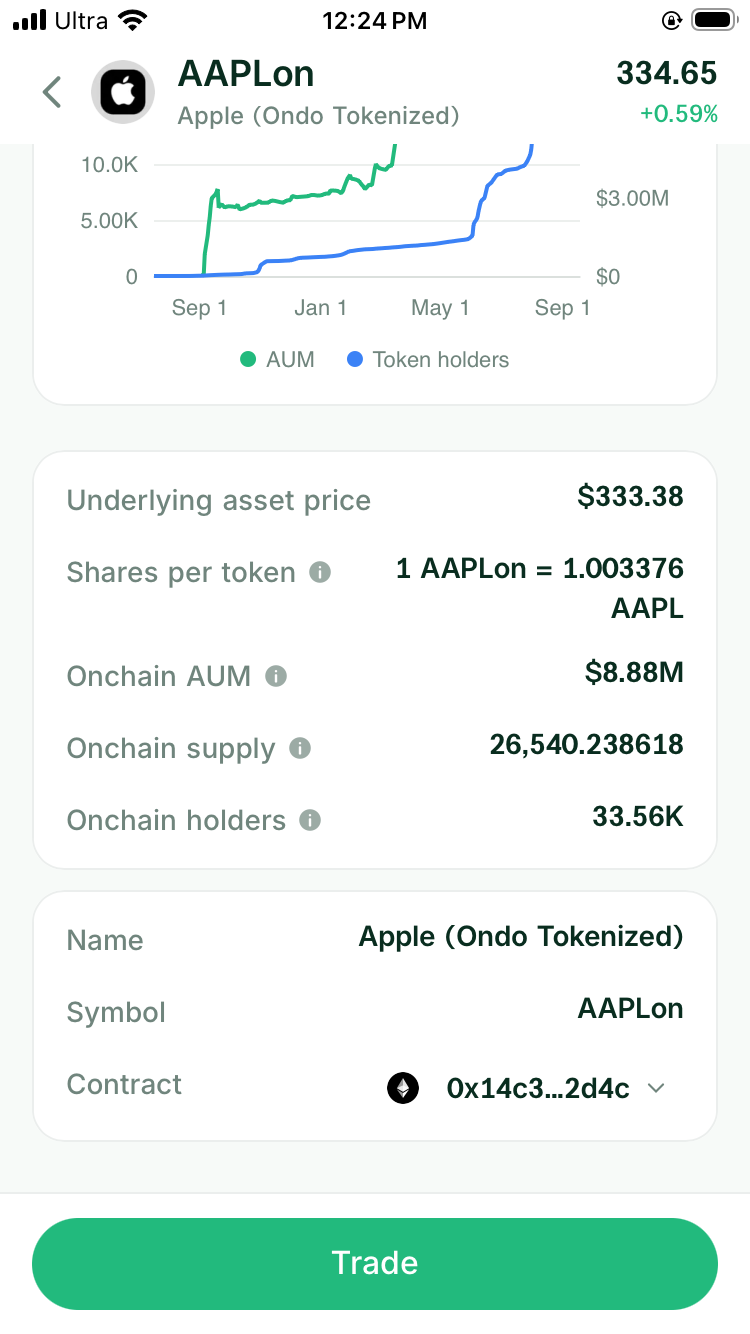
A stock ticker is not enough. Open the token information page and look for:
- issuer and exact contract address
- underlying stock or ETF
- network
- issuer documents and eligibility terms
- how dividends and corporate actions affect the token
- reference price and executable quote
Use the issuer’s own asset list to confirm the contract. Wallet labels help you navigate, but the issuer defines the product and its restrictions.
Read the quote as an execution offer
The stock price shown in a market list may be a reference price. The amount you can trade depends on the route available at that moment.
Before signing, check the quoted output, spread or price difference, price impact, slippage limit, fee, network cost, and quote timestamp. For an eligible Ondo order, the RFQ route connects the token order to the price and available liquidity of the corresponding stock in the traditional US market. It can therefore offer more depth than relying only on one on-chain pool, but the quote is still live and may expire within seconds. AMM routes depend directly on pool depth. Some issuers or liquidity providers may stop quoting certain assets while the underlying US market is closed.
The blockchain keeps running through nights and weekends, while stock-token quotes can still change with US market sessions and each liquidity provider’s schedule.
Decide what you will do after the purchase
Long-term holders need a clear asset record, safe transfer support, and a workable exit. Active DeFi users need more.
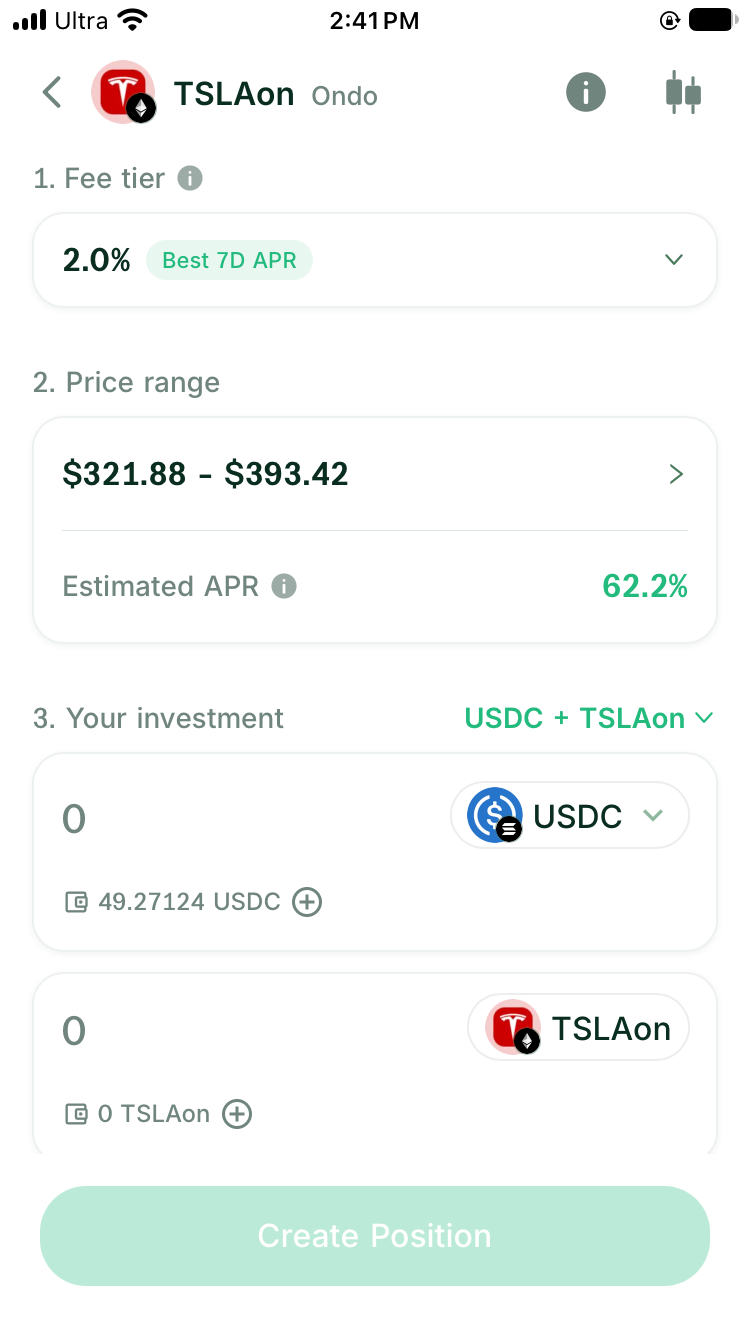
If you plan to provide liquidity, confirm that the wallet or connected protocol has an active pool for the exact token. Check the paired asset, current liquidity, range model, fee accounting, and withdrawal path. After finding the token in a wallet, you still need a corresponding pool before you can deposit and earn trading fees.
DeGate becomes more relevant when buying is not your final step. It is a self-custody multichain wallet with stock trading and Turbo Range position management in the same product. You can confirm the stock-token issuer, trade through an available route, and establish an eligible Ondo stock/USDC position on Ethereum. The same product then lets you monitor the range, claim fees, and close the position.
Before you create an LP, read the exact pair, funding amounts, any auto-swap, price range, network-fee estimate, and closing steps. After creation, the stock token and paired asset trade under the pool’s rules.
A short selection routine
- Choose the issuer and exact token.
- Confirm your region is eligible.
- Check which wallet has a native route on the required network.
- Compare executable quotes for the amount you plan to trade.
- Confirm how you will transfer, use, or exit the asset afterward.
- Start with a small transaction and verify the result on-chain.
If you want to earn trading fees from a stock LP, DeGate is a useful place to start. You can buy the stock token first and deposit it with USDC, or start in Turbo Range and use one-sided funding with USDC alone. In the second route, the system prepares the stock-token side of the position, so a manual swap is not a required step. If you only want to buy and hold, another wallet may suit your network, region, or funding method better. A general-purpose wallet such as Rabby also works for users who already know the exact contract and application they want to open.
FAQ
Can MetaMask or Rabby hold tokenized stocks?
They can hold compatible tokens on networks they support. MetaMask also has a native Ondo RWA trading entry. For Rabby, token compatibility should not be confused with a dedicated stock product; verify the contract and use a separate trusted venue when the wallet does not provide discovery or quotes.
Which wallet supports both Ondo and xStocks?
DeGate’s stock pages identify Ondo and xStocks and show the corresponding issuer information. When the route is available for an Ondo order, a solver partner integrated with DeGate can request an RFQ through Ondo’s official API. Bitget Wallet’s official RWA Trading API lists Ondo and xStocks as well. Check the exact network, order size, and live quote in the product before trading.
Which wallet is best for tokenized-stock LPs?
The answer depends on the active pool and the position tools you need. DeGate connects on-chain stock trading with Turbo Range LP creation and management for supported assets. Eligible Ondo assets on Ethereum use the same position flow regardless of the underlying pool state. Compare the exact token, liquidity, range controls, fee accounting, and exit flow before depositing.
Does a self-custody wallet remove issuer restrictions?
No. The issuer’s eligibility, transfer, and redemption rules still apply to the token. Self-custody changes who controls the wallet keys; it does not rewrite the financial product.
Sources
- DeGate FAQ
- DeGate Turbo Range documentation
- MetaMask: Real-world assets
- Trust Wallet: Access tokenized real-world assets
- Bitget Wallet: RWA Trading API
- Robinhood: Stock Tokens
- Robinhood Chain: Stock Tokens
- Coinbase Tokenize: Coinbase Tokenized Stocks
- xStocks documentation
- SEC staff statement on tokenized securities
Facts on this page were last verified on October 19, 2026. Product capabilities, supported assets, and fees can change; the linked sources are the current record.