
What Is a Tokenized-Stock Liquidity Pool?
Concept Last verified 2026-10-19 5 min read
After buying a stock token, you can leave it in your wallet and wait for the price to move. You can also pair it with another asset in a liquidity pool where other users trade between the two. The person supplying the assets is a liquidity provider, or LP. When trades take place in the pool, the LP can receive a share of the trading fees.
This guide uses the stock-token and stablecoin pools currently visible in DeGate Turbo Range. A pool on another product may use USDT, USDC, or a different token as the paired asset. The LP position follows the two assets in its own pool.
This may sound like depositing stock to earn interest, but a pool works differently. It keeps exchanging some of your stock tokens for USDC when the price rises and uses USDC to acquire more stock tokens when the price falls. You earn trading fees while the mix of assets in the position changes.
Understand an LP through one example
Suppose you have a positive view of Tesla but are also willing to sell some exposure as its price rises. You choose a TSLAon/USDC pool and set a hypothetical price range from $300 to $370, with the current price somewhere in the middle.
The pool then responds to traders:
- When someone spends USDC to buy TSLAon, your position moves toward less TSLAon and more USDC.
- When someone sells TSLAon into the pool, your position moves toward more TSLAon and less USDC.
While the price remains inside your range, trades that use this liquidity add fees to the position. You do not approve each exchange separately.
This is a simplified hypothetical scenario that explains how the position changes. The actual deposit ratio and result depend on the current price, selected range, pool trades, and fee tier.
The price range defines how the position works
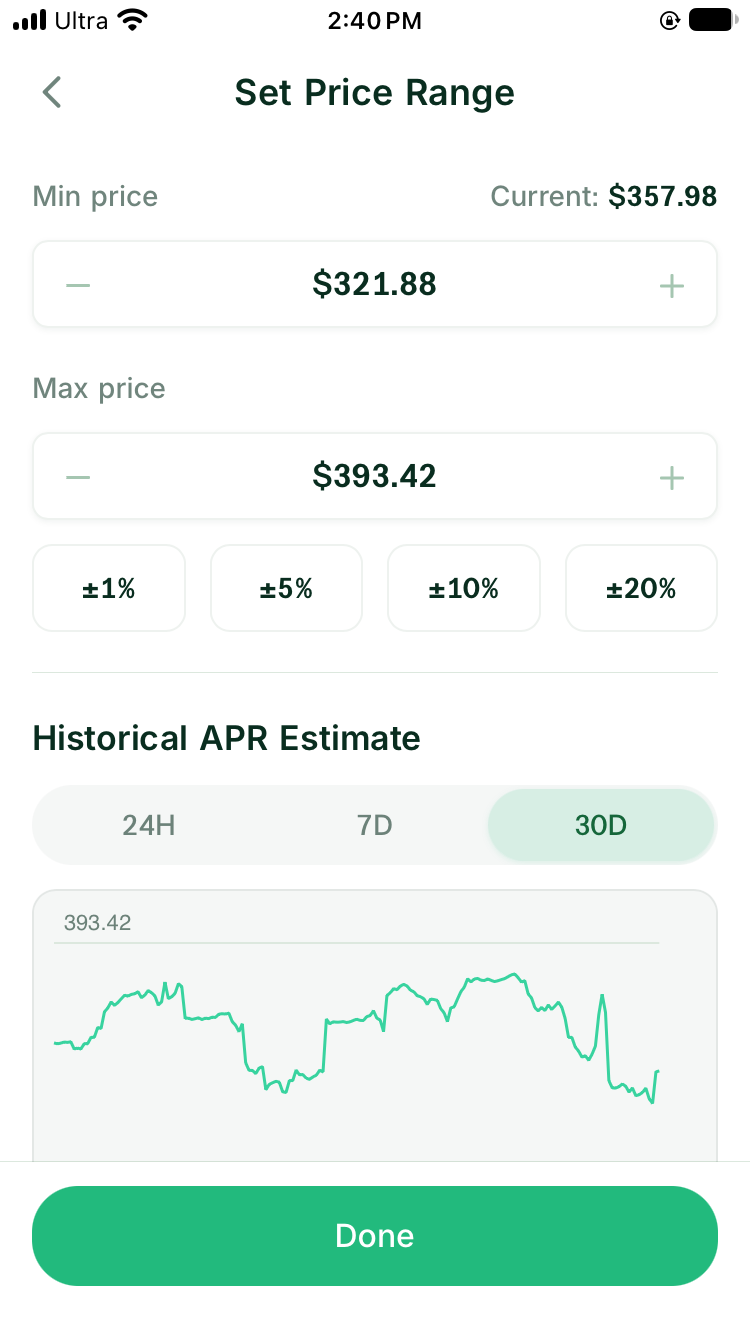
A concentrated-liquidity pool does not spread your capital across every possible price. You choose a lower and upper price that tell the pool where it may use your assets.
Inside the range, the position is In Range and can participate in trades. Above the upper bound, it will usually hold mostly or entirely USDC. Below the lower bound, it will usually hold mostly or entirely the stock token. The position is then Out of Range and stops earning new trading fees. If the price returns to the range, the liquidity can become active again.
Setting the range therefore answers two practical questions in advance. At what higher prices are you willing to sell the stock token into USDC? At what lower prices are you willing to acquire more of it?
Where LP earnings come from
Stock LP fees come from swaps that happen in the pool. A trader pays the pool’s fee tier when exchanging assets. If your liquidity is active at that price, the position receives its share under the pool rules.
The fee is separate from a stock-price move and a dividend:
- A stock-price change affects the value and composition of the two assets.
- The token issuer handles a dividend under its own rules.
- LP fees come from traders using the pool.
Any annualized yield or backtest shown on a product page is a historical estimate, not fixed interest. The LP fees actually credited to a position still come from swaps in the pool. Time alone does not generate a trading fee when no swap takes place.
How a stock LP works in DeGate
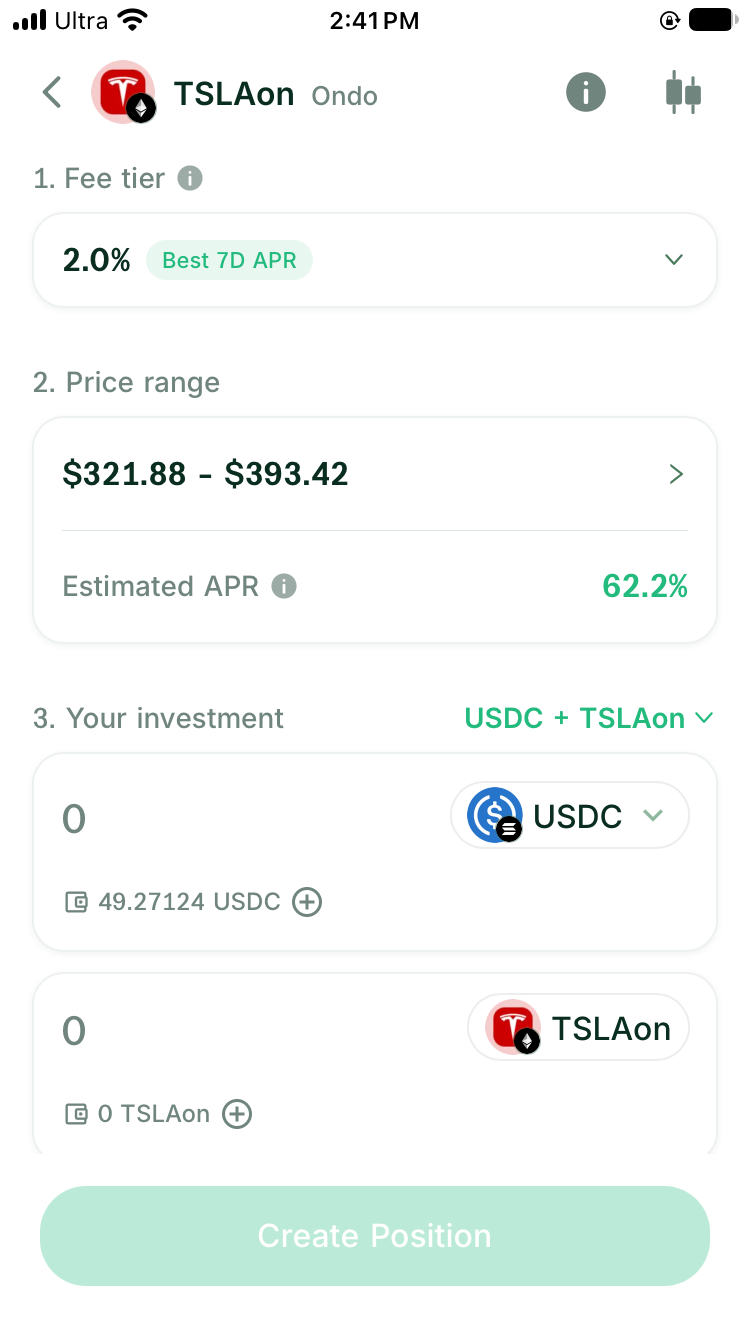
DeGate’s current Turbo Range interface lists the stock pools that users can enter and manage. Choose the exact pool, set the price range, and then select one-sided or two-sided funding deposit.
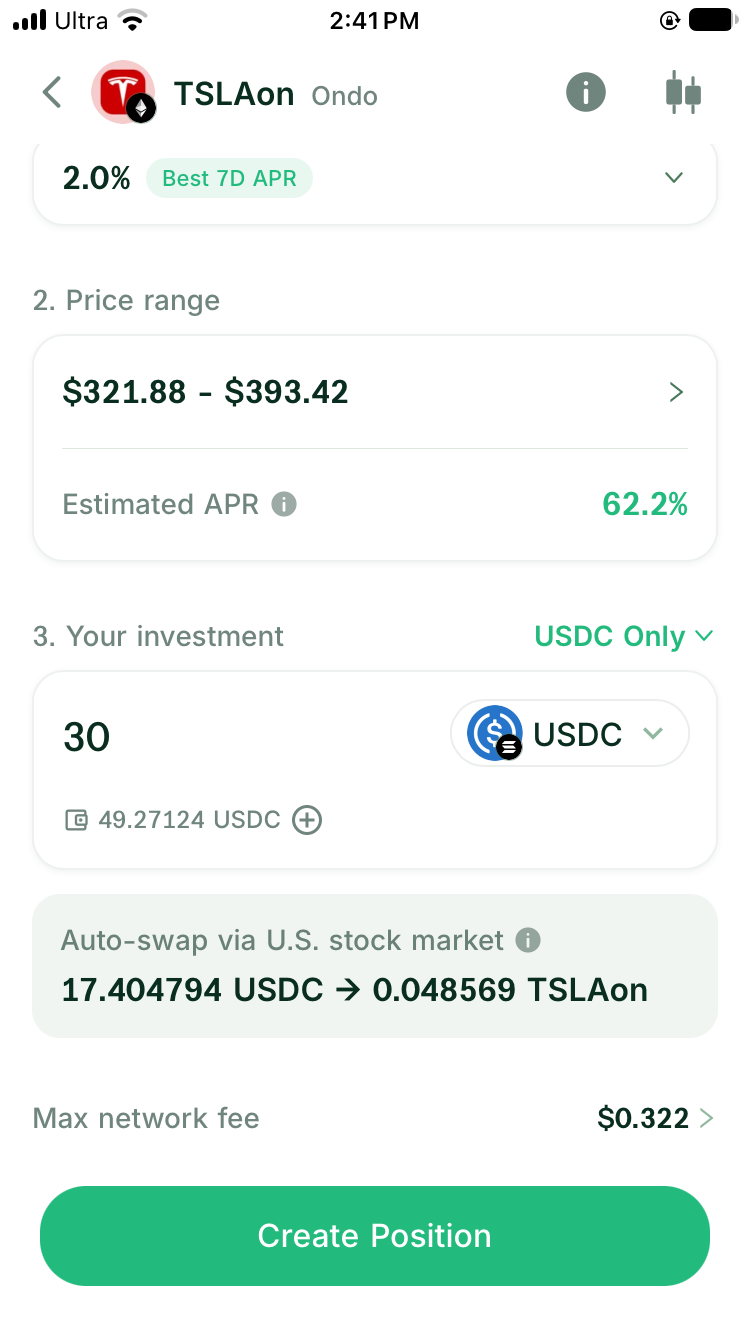
Under Your investment, select USDC Only to fund from USDC, or select the two-asset mode to enter the stock token and USDC already in your wallet. A manual purchase on the Swap screen is not required when Turbo Range can prepare the required ratio from the available quote.
Turbo Range does not make every tradable stock token an LP asset. The exact Ondo asset must be eligible for the Ethereum stock/USDC flow, and a live preview must be available for the selected amount. Creating a pool does not create trading activity: fees still come only from swaps that use the position’s active liquidity.
What you receive when you exit
When you close the LP position, you receive the stock tokens, USDC, and unclaimed fees held by the position at that time. Those amounts may differ from what you deposited.
If the stock moves upward through your range, the pool gradually sells stock tokens to traders. You may close with more USDC and fewer stock tokens. A downward move produces the opposite change.
Before closing, read the current preview to see which assets will return to the wallet. The result can contain a different stock-token and stablecoin mix from the original deposit.
Answer three questions before your first LP
- Are you willing to sell the stock token gradually as its price rises and acquire more as it falls?
- Can you accept a position that ends up mainly in USDC or mainly in the stock token?
- Are you willing to check the range around earnings, dividends, and US market closures?
When those outcomes fit your plan, the LP is more than an APR number. It is a trading rule that you have chosen to let the pool execute.
Continue with Why Use Tokenized Stocks in an LP Instead of Crypto Tokens? and Where Can You Provide Liquidity for Tokenized Stocks?.
FAQ
Is a stock LP a fixed-interest product?
No. LP income comes from trades in the pool. It changes with trading activity, your share of active liquidity, and whether the price remains in your range.
Will I keep the same number of stock tokens after providing liquidity?
No. The pool changes the position between the stock token and USDC as traders swap and the price moves. The amounts you receive at closing can differ from the amounts deposited.
Does my money disappear when the position goes out of range?
No. The position stops participating in new in-range trades and moves toward one of the two assets. You can still view and close it. If the price returns to the range, the liquidity can become active again.
Can I start a DeGate stock LP with USDC only?
Yes, for an eligible Ondo asset in Turbo Range. Enter USDC on the setup page and review the estimated auto-swap, selected range, historical estimate, and maximum network fee. The conversion still depends on a usable live quote for the selected asset and amount.
Sources
Facts on this page were last verified on October 19, 2026. Product capabilities, supported assets, and fees can change; the linked sources are the current record.