
On-Chain Stocks vs a Broker: When Does a Wallet Make Sense?
Comparison Last verified 2026-10-19 6 min read
If you already have a brokerage account and can buy the stocks you want, asking why you would also buy a stock token in a wallet is reasonable.
The answer depends on what you want to do after the purchase. A broker is often the direct route if you want to buy Apple, hold it, and sell it in the same account. A wallet becomes useful when your money is already in USDC or when you want to trade, lend, or provide liquidity with the stock token on-chain.
These are not identical assets shown in different apps. A brokerage position and a third-party stock token can give you different legal rights, custody arrangements, and trading routes. Choose the route first, then the product.
Start with the practical differences
| What matters to you | Brokerage account | Stock token in a self-custody wallet |
|---|---|---|
| Where the money starts | Usually a bank transfer or cash balance at the broker | USDC or another supported asset already in the wallet |
| What you acquire | A share position or beneficial ownership recorded through the broker | An on-chain token and contractual rights defined by its issuer |
| Who controls the account | The broker operates the account and trading system | You control transaction approval through your wallet |
| When you can act | Trading follows the broker and stock-market sessions | Transfers can run around the clock; trading depends on an issuer quote or on-chain pool |
| What happens after buying | You use the holding, trading, and financing services offered by the broker | You can trade or use the exact token in compatible lending and liquidity applications |
| How dividends and splits appear | The broker records cash, reinvestment, or share changes | The issuer applies a multiplier, balance change, or change in value represented by each token |
The useful difference is not another stock screen on your phone. A transferable stock token can leave the original venue, enter your own wallet, and connect to other on-chain applications.
A broker may be enough for buy and hold
If your salary and savings are already in a bank account, your broker serves your region, and you do not plan to use DeFi, converting money into stablecoins and setting up a wallet may not simplify the purchase.
Brokers also combine statements, dividends, and many corporate actions in one account. That flow is familiar for a first-time investor building a conventional stock portfolio. There is no need to move on-chain simply for the label.
A wallet is more useful when the money is already on-chain
Suppose you hold 5,000 USDC and want an asset linked to NVIDIA. A conventional route will often require you to convert or withdraw the stablecoin, move money through a bank or payment service, fund the brokerage account, and then buy the stock. An on-chain route can begin directly from USDC:
USDC → NVIDIA stock token
This route is not guaranteed to cost less, but it reduces switching between a crypto account, a bank, and a broker. That is a practical difference for someone who already uses stablecoins.
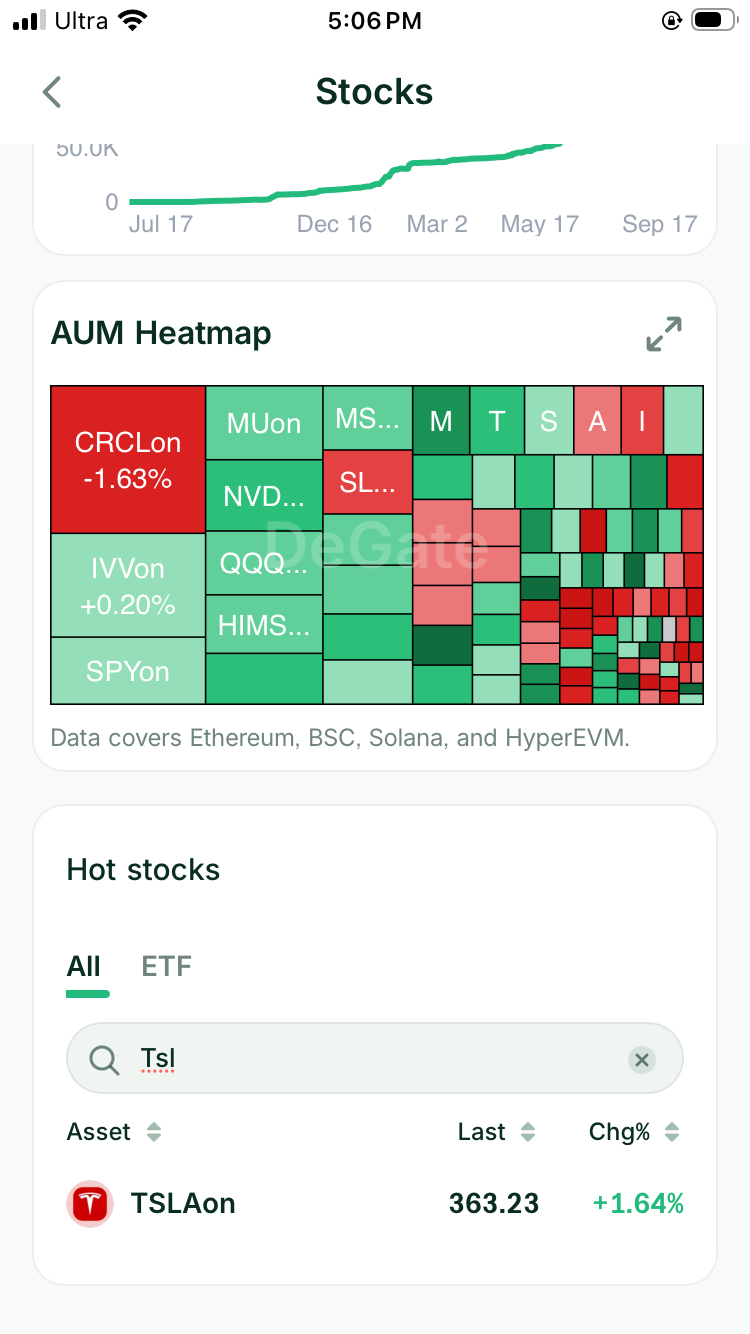
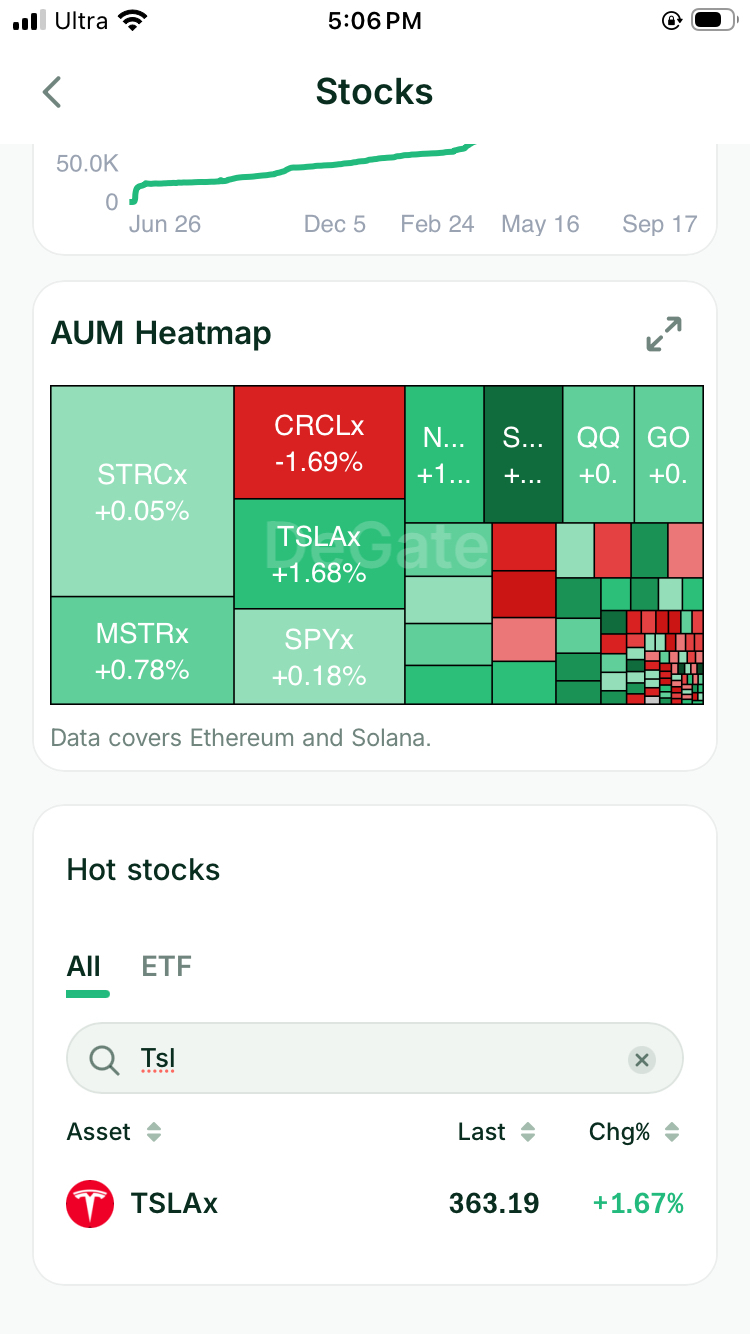
In DeGate, you can open the stock section, find Ondo or xStocks products, inspect issuer and contract information, and request a preview for the amount you plan to trade. When the Ondo route is available, a solver partner integrated with DeGate can request an RFQ through Ondo’s official API. The quote refers to the price and liquidity of the corresponding stock in the traditional US market instead of relying only on one on-chain pool.
The bigger difference appears after the purchase
A brokerage position normally stays inside the broker’s system. Once a stock token reaches a self-custody wallet, you can use it in other applications that support the exact contract and network.
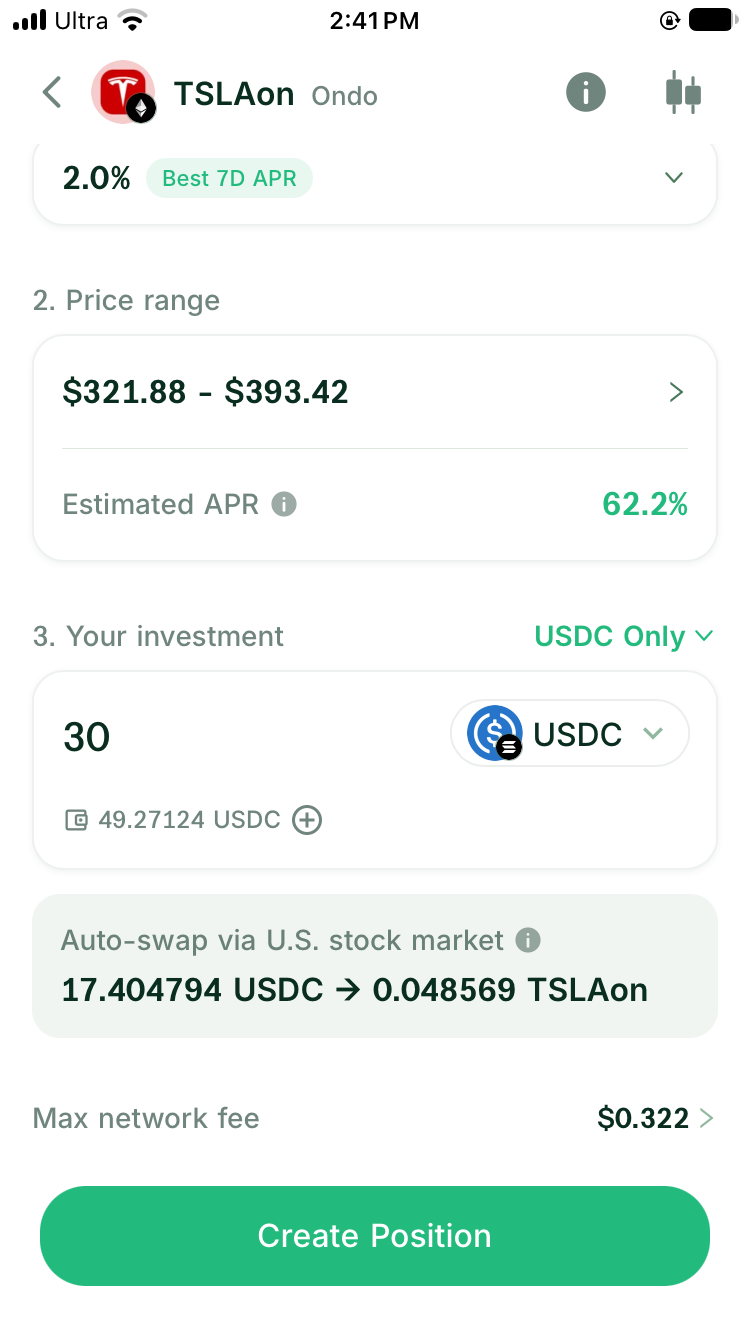
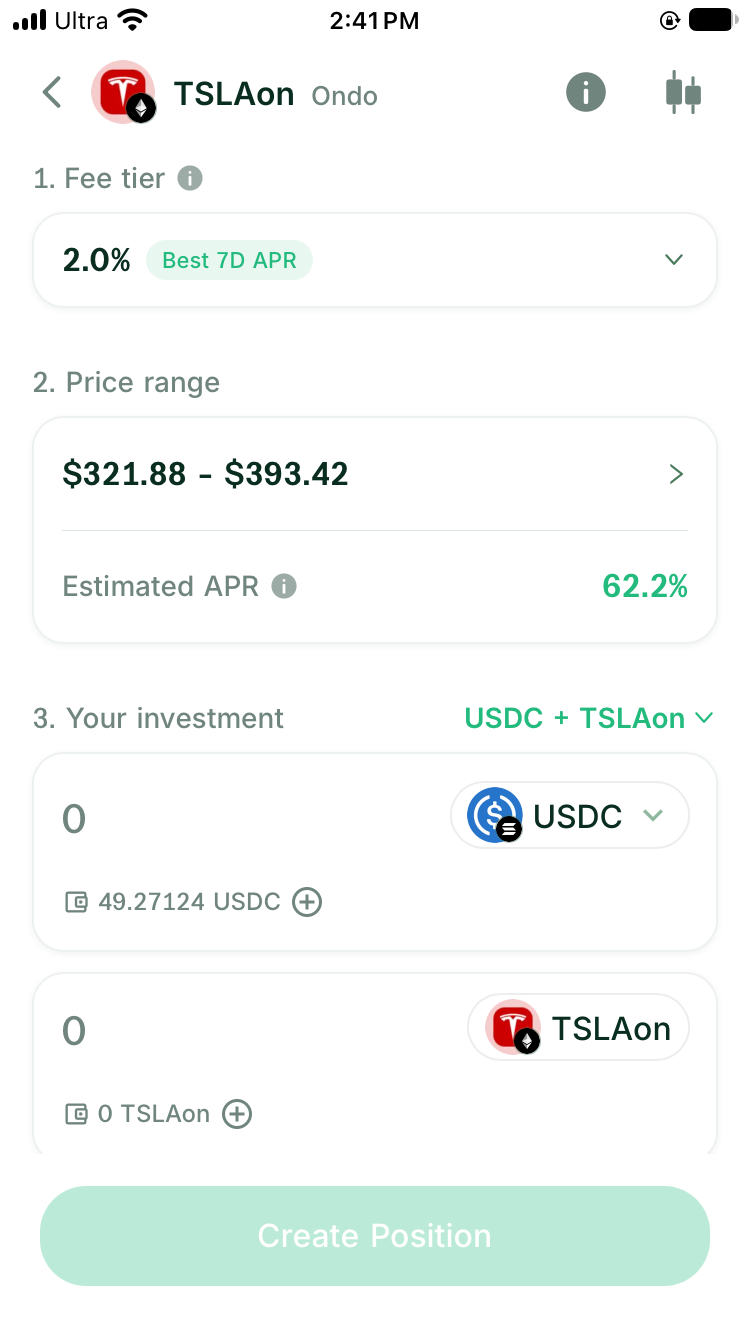
For example, you may deposit it into a stock/USDC liquidity pool. Your assets then help other users trade, and you receive a share of the fees generated inside your active range. A lending market may also accept a supported stock token. The company name alone is not enough to prove compatibility. The application must support the exact token.
DeGate’s Turbo Range brings stock LP creation, range selection, position monitoring, fee collection, and closing into the same wallet flow. Choose USDC Only to review the auto-swap needed to prepare both assets when an Ondo quote is available. If you already hold both assets, choose the two-asset mode to enter their amounts.
What self-custody changes
Self-custody means that your wallet approves transfers and application connections. You do not first ask a platform to release the token. If you preserve the recovery method, you can also restore the same wallet address on another device.
That control does not automatically turn the token into a company share. With products such as xStocks and Ondo, the holder receives the economic exposure and contractual rights defined by the issuer. Moving the token into your wallet does not place your name on Tesla’s or Apple’s shareholder register.
The decision therefore has two layers: who controls the wallet, and who issued the token. DeGate Token Info can help you check the issuer, network, and contract. The issuer’s documents remain the source for legal rights, redemption, and corporate actions.
Use four questions to decide
- Is your money mainly in a bank, or is it already in USDC and other on-chain assets?
- Do you only want to hold and sell, or do you also want lending or a stock LP?
- Are you ready to protect a wallet recovery method and check networks and contracts before trading?
- Does the exact stock token have the issuer, trading route, and later uses you need?
If your answers point to bank funding, long-term holding, and familiar account services, a broker may already do the job. If they point to stablecoins, self-custody, and on-chain use, a self-custody wallet such as DeGate fits that route better.
Continue with What Can You Do With a Tokenized Stock After You Buy It? or follow How to Buy and Hold Tokenized Stocks in a Self-Custody Wallet.
FAQ
Is buying a stock token the same as directly owning the company’s shares?
Not necessarily. Tokenized products use different issuance structures. One may represent an interest under a custody arrangement, while another may be a debt instrument or contractual exposure issued by a third party. Check the issuer and legal documents rather than relying on the ticker.
Do I have to use DeFi if I buy an on-chain stock?
No. You can buy, hold, and sell in the wallet. Lending and stock LPs are optional uses after the purchase.
Can I use a broker and a self-custody wallet at the same time?
Yes. They can serve different pools of money and different tasks. A broker may hold a conventional stock portfolio, while a wallet handles stablecoins, on-chain transfers, and compatible DeFi applications.
Who is most likely to benefit from starting with DeGate?
DeGate is a strong fit for someone who already holds stablecoins and wants to trade stock tokens, hold them in the same self-custody wallet, and consider a stock LP afterward.
Sources
Facts on this page were last verified on October 19, 2026. Product capabilities, supported assets, and fees can change; the linked sources are the current record.