
Why Use Tokenized Stocks in an LP Instead of Crypto Tokens?
Comparison Last verified 2026-10-19 6 min read
A stock-token LP and a crypto-token LP use similar pool mechanics. Both provide assets to traders inside a price range, earn trading fees, and change their asset mix as the price moves.
The important difference is the asset inside the pool. A stock token follows the economic performance of a listed company or ETF. Company earnings, public disclosures, dividends, and a traditional stock market give its price a set of familiar references. A crypto token may derive value from network use, token supply and demand, or market narratives, so the research process can look different.
The risk and return of a stock LP still depend on the asset, range, and trading activity. Someone who already understands stocks gains one practical advantage: familiar company research and price views can carry into the LP without first building a full thesis on an unfamiliar crypto project.
Stocks give the price range more real-world reference points
An LP range is a view about where the price may trade over a period of time. For a listed company, you can study its recent price, earnings, industry conditions, and public announcements. You can also see when its next earnings release is expected and decide whether to widen the range or reduce the position beforehand.
Crypto tokens also have useful data, but their prices may respond more directly to token issuance, unlocks, on-chain activity, and market sentiment. If you already follow Tesla, NVIDIA, or an S&P 500 ETF, a stock token can make the range easier to connect to an investment view you already have.
For example, you may believe that a stock will trade within a band over the next month. You are also comfortable converting some stock exposure into USDC if it rises and acquiring more if it falls. That view can be expressed directly as a stock/USDC LP range.
Stock tokens add a price source outside crypto-native assets
Many DeFi positions are built from stablecoins, ETH, BTC, and other crypto tokens. A stock token lets the same wallet and on-chain tools use an asset linked to a listed company.
For someone already holding substantial crypto assets, stock tokens add another type of market exposure. They do not create diversification by themselves because stocks can fall and technology stocks sometimes move with crypto markets. The practical change is that users can add stock-linked assets to an on-chain portfolio that previously contained only crypto tokens.
Dividends add another source of return
Some listed companies pay dividends. The current documents for xStocks, Ondo, Robinhood Stock Tokens, Coinbase Tokenized Stocks, and bStocks all describe eligible dividends being reinvested after applicable deductions. They record the result through a multiplier or shares-per-token value. Depending on the token and wallet, the result may appear as a larger displayed balance or as more stock value represented by each token. How Tokenized-Stock Dividends Show Up in Your Wallet explains why the screen can look different even when the dividend has been reinvested.
That return begins with the company and is separate from LP trading fees. A stock LP result can reflect a stock-price change, the issuer’s dividend treatment, and fees generated by pool trades. Keep the three components separate rather than presenting them as one fixed rate.
A crypto token may have staking rewards or protocol incentives, but those payments come from different mechanisms. Staking rewards come from a network or token system, LP fees come from traders, and company dividends begin with a listed company’s distribution of profits.
Stock-market time changes the rhythm of the LP
Stocks have scheduled earnings, ex-dividend dates, and defined US market sessions. A stock token can remain transferable on-chain and some pools can keep operating over the weekend, even when fewer issuer quotes and traditional-market prices are available.
This gives a stock LP a rhythm that is less common in a crypto LP. During active US sessions, issuer quotes and arbitrage can help the pool stay closer to the referenced stock. On a weekend or during a corporate action, the on-chain pool may continue while price differences temporarily widen. A user can plan when to check the range instead of treating every day as the same market environment.
The main differences between the two LPs
The table keeps USDC as the paired asset so the two sides are easy to compare. The stock-token/USDC column uses DeGate Turbo Range as its example. Other stock and crypto pools may pair the main token with USDT, another stablecoin, or another token. In these examples, LP fees come from swaps executed in the exact pool.
| Comparison | DeGate Turbo Range stock-token/USDC example | Crypto-token/USDC comparison example |
|---|---|---|
| Main price reference | Market price of the listed company or ETF | Token prices formed on crypto exchanges and on-chain markets |
| Research inputs | Earnings, company disclosures, dividends, and industry data | Network use, token economics, unlocks, governance, and crypto-market data |
| Special dates | Earnings, ex-dividend dates, splits, and US market closures | Token unlocks, protocol upgrades, governance events, and continuous market movement |
| Other return source | Eligible dividends may enter the token under issuer rules | Staking or protocol incentives may apply to some tokens |
| Source of LP fees | Swaps executed between the stock token and USDC in this Turbo Range pool | Swaps executed between the crypto token and USDC in the comparison pool |
| Additional check | Stock-token issuer, contractual rights, and corporate-action mechanism | Token contract, project mechanics, and issuance schedule |
This comparison does not rank one asset class above the other. It helps you choose the market that you already understand and are willing to follow.
Why DeGate fits this stock LP model
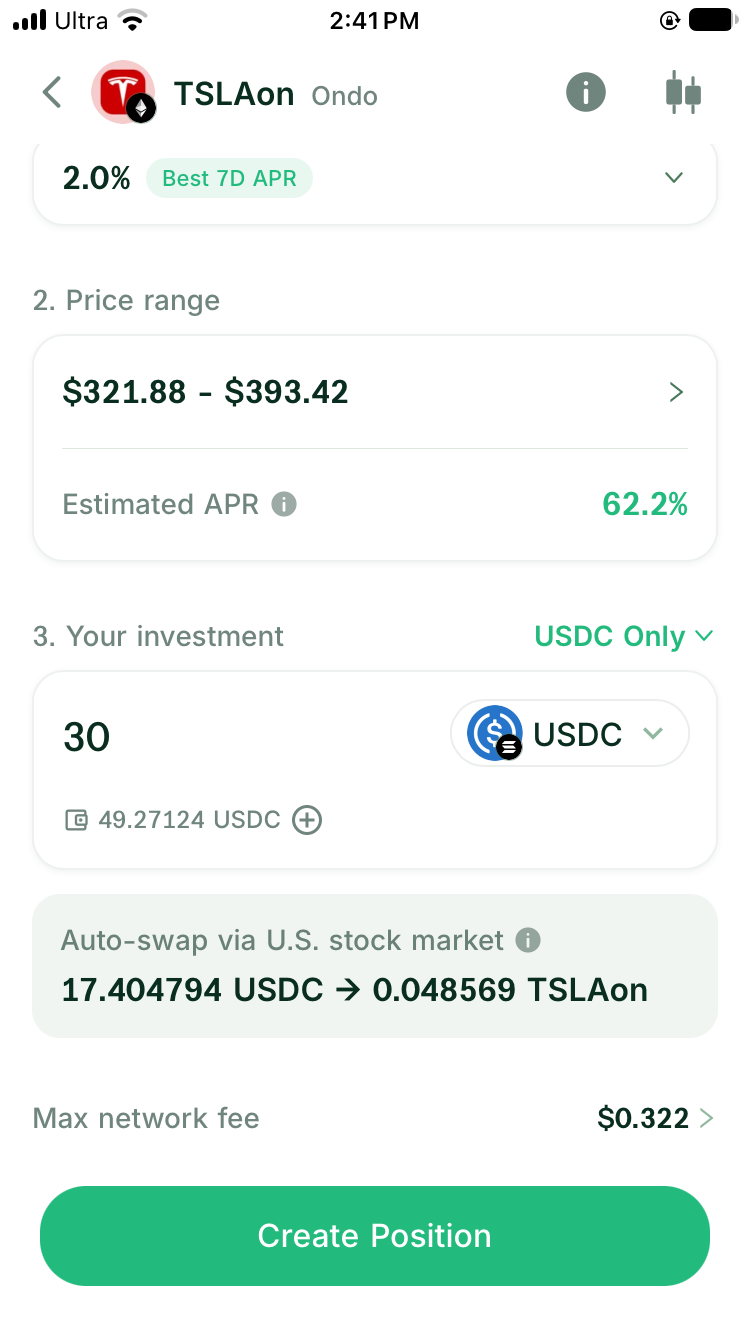
DeGate connects stock discovery and trading with Turbo Range. Eligible Ondo assets on Ethereum can enter an existing stock/USDC pool or start a new one, while the token and position remain in the same self-custody wallet.
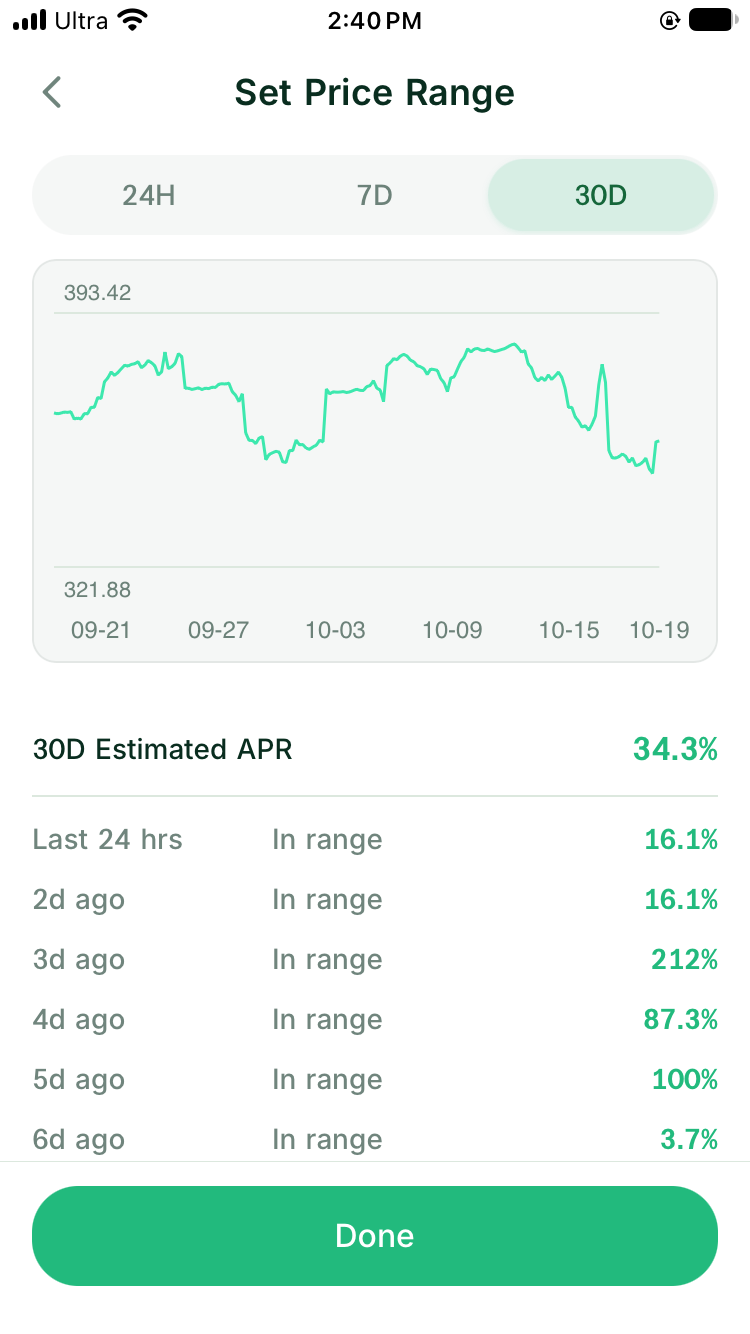
For a supported pool, one-sided funding can begin with one asset when the current flow can prepare the position. Two-sided funding starts with both pool assets already in the wallet. The setup screen shows the input, selected range, historical estimate, and maximum network fee. In either case, check the exact pair, amounts, and final preview before confirming.
This current flow does not mean every stock token has a pool. It also does not create fee income by itself. LP fees come from actual swaps through the active range, so the pool’s liquidity and trading activity remain part of the decision.
Who may prefer a stock LP
A stock LP is more likely to fit someone who already follows a company or ETF and accepts that the position will move between the stock token and USDC. You are deciding more than whether the stock will rise. You also accept gradual selling on the way up and gradual buying on the way down.
If you understand a crypto network better, want long-term exposure to its native asset, and do not want to plan around US market closures and corporate actions, a conventional crypto LP may fit your process better. Choosing an asset you can explain matters more than choosing the highest displayed APR.
FAQ
Is a stock-token LP always less volatile than a crypto LP?
No. Volatility varies across stocks and crypto tokens, and a single stock can move sharply after earnings or company news. The stock LP advantage is access to more company and traditional-market information, not guaranteed low volatility.
Does a stock dividend become an LP fee?
No. The listed company and stock-token issuer handle the dividend. LP fees come from swaps in the pool. Both can affect the final result, but they have different sources.
Does a stock LP stop when the US market closes?
An existing pool can keep operating while its blockchain and contract run. Traditional price discovery is less active at that time, so pool prices and quote conditions can differ from an active US session.
What does DeGate add when a supported stock pool already exists?
DeGate combines stock discovery and trading with Turbo Range. For an eligible Ondo asset on Ethereum, you can open a stock/USDC LP position through the same setup flow. A usable live preview is still required, and LP fees begin only when traders use the active liquidity.
Sources
- Investor.gov: Stocks
- Uniswap: Concentrated Liquidity
- Uniswap: Fees
- Ondo: Corporate Actions
- Ondo: Market Hours and Trading Availability
- xStocks: Dividends and Stock Splits
- Robinhood Chain: Stock Tokens
- Coinbase Tokenize
- Binance bStocks FAQ
- DeGate: Turbo Range
- DeGate Playbook: Tokenized Stocks and 24/7 Price Discovery
Facts on this page were last verified on October 19, 2026. Product capabilities, supported assets, and fees can change; the linked sources are the current record.